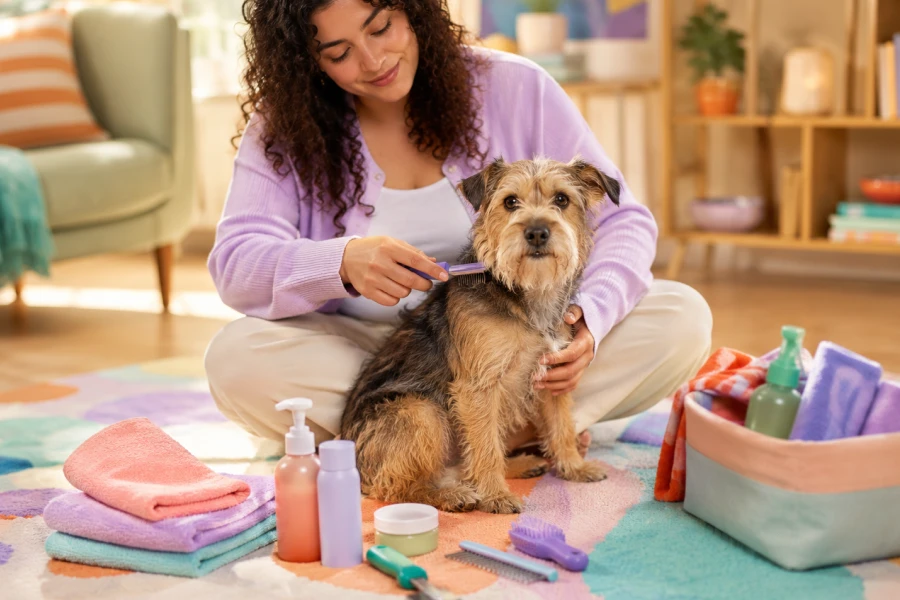
A weekly grooming rhythm can make pet care feel less like an emergency. Instead of waiting until mats, dirt, or long nails force a difficult session, you can spread care into smaller moments. Stress-free pet grooming becomes easier when every step has a calm, clear purpose. This approach helps pets tolerate handling because the experience rarely becomes overwhelming. It also makes grooming more realistic for people with full schedules. A few focused minutes can support coat care, bathing preparation, and familiar touch. Those minutes become easier to protect when they follow a loose but dependable rhythm. You do not need a perfect calendar to make steady care possible. You need a routine that works often enough to stay familiar. That is the foundation of calmer grooming over time.
Start by deciding which tasks benefit from frequent, brief attention. Brushing may work best several times a week, while bathing needs a different pace. Paw handling can become part of an ordinary evening rather than a separate event. Coat checks after outdoor time may catch small issues before they become bigger ones. This approach keeps every session focused on a realistic goal. It also limits the temptation to cram several difficult tasks into one sitting. A thoughtful brushing routine for pets can make the first minutes feel less demanding. When care arrives in smaller pieces, pets have more chances to succeed. Those successes build familiarity with tools, touch, and the grooming area. The routine slowly becomes part of the household’s normal rhythm.
Short sessions work because they protect attention and patience. Just a few slow brush strokes may be enough for a pet still learning the process. A quick wipe can prepare paws for a future cleaning routine. A brief look at nails can make later trimming feel less surprising. Reliable pet bathing preparation should support the task without making handling feel rushed. Focus on finishing before your pet starts to disengage. That ending gives the next session a better starting point. It also gives you a clearer picture of how much handling your pet can manage today. The aim is not to measure success by time alone. It is to make the task repeatable without a surge of stress.
Timing can matter as much as technique. Some pets welcome quiet handling after a walk, while others prefer a rested morning. Notice when your pet is alert but not overexcited. Avoid starting a new task immediately after a busy outing or a loud household moment. The body learns faster when it is not already trying to recover from stimulation. Your schedule may need to adapt around the pet’s most receptive times. Practicing pet nail care confidence makes future sessions easier to approach. That adjustment can make an ordinary brush feel much easier than expected. It also reduces the urge to blame the tool when the timing caused the resistance. Good timing is one of the simplest ways to make grooming gentler.
Repeatable cues help your pet understand what the session will involve. Use the same location, towel, or opening phrase whenever possible. Bring out tools in the same order rather than changing the process every time. Let the first step remain easy, even when you plan to do more later. This familiar sequence lowers the amount of new information your pet must process. It also helps you notice when a specific step needs more practice. Simple repetition is not boring for a pet learning to trust. It is reassurance that the experience has understandable boundaries. That reassurance makes gradual progress easier to maintain. The more predictable the routine feels, the less force it requires.
Some grooming tasks ask more from a pet than others. Bathing, mat removal, or nail care can require extra patience and recovery time. After a demanding step, offer a calm activity that helps your pet reset. A favorite resting spot, a quiet walk, or simple play can create that transition. Avoid piling another difficult task on top of the first one. Recovery helps your pet remember that the session ended safely. It also gives you a better chance to observe whether the pace felt appropriate. This information can shape how you plan the next session. A flexible rhythm recognizes that energy and tolerance change from week to week. That flexibility keeps the routine sustainable.
A realistic grooming rhythm is more valuable than an occasional perfect session. Small care moments can protect comfort before a problem feels urgent. They can also make tools and touch more familiar over time. By paying attention to timing, you make cooperation easier to find. By stopping early, you give the next session a better chance. Those decisions make care gentler without making it less effective. Let the rhythm fit your household instead of forcing a rigid system. Consistency grows when the plan respects real life. Soon, grooming becomes less of an event and more of a shared habit. That shift can make all the difference.



Leave a comment