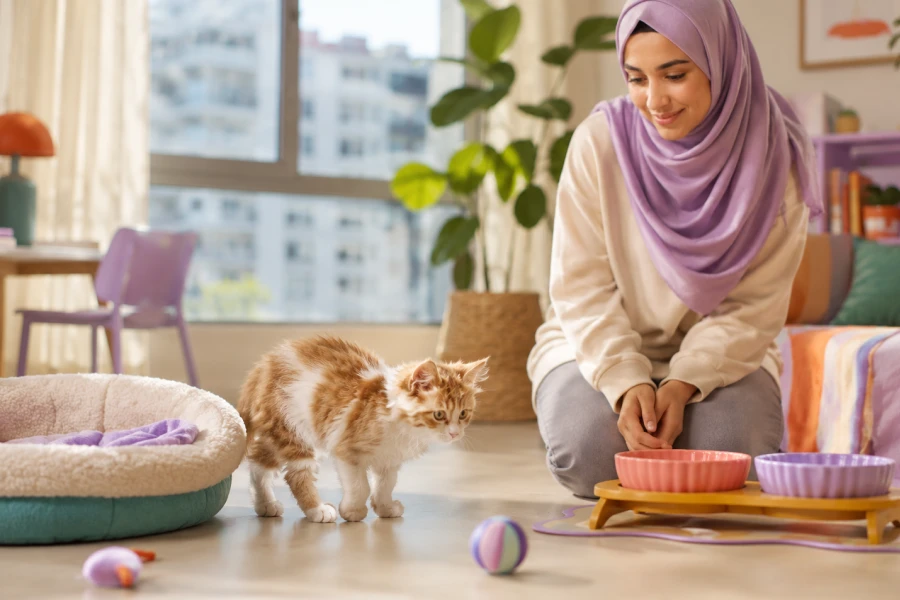
Bringing home a kitten changes the rhythm of every room. Small decisions during the first few days shape how safe the new space feels. New kitten home adjustment works best when people lower the pressure and raise the predictability. That does not require a complicated schedule or constant intervention. Instead, it asks for a quiet base, a few dependable cues, and patient observation. Food, water, litter, rest, and play become easier to understand when they follow a gentle pattern. Many new owners worry because hiding and exploration can alternate without warning. Those shifts often show that the kitten is gathering information at a manageable pace. Careful observation helps you respond without turning every pause into a problem. The goal is not instant confidence but steady comfort that grows day by day.
Begin with one peaceful room that feels easy to map and leave undisturbed. A smaller starting area gives unfamiliar sounds and scents less power to overwhelm. Place essentials in clear zones rather than clustering every item into one corner. Keep the sleeping area soft and protected, especially during the busier parts of your day. From there, offer short visits instead of making the room a constant social stage. Your presence should feel available, not unavoidable, while confidence is still forming. Your safe kitten room setup should make retreat, rest, and curiosity equally available. Leave an open pathway between basic resources so the kitten can navigate without hesitation. Then let curiosity decide when a little more of the home becomes interesting. That early sense of control supports trust long after the room expands.
Predictability comes from simple sequences rather than rigid, clock-driven rules. Offer meals in the same place and keep the litter area quietly accessible. Short play sessions can arrive after rest, not as a demand for immediate interaction. Meanwhile, familiar voices and low household volume make the setting easier to read. That is why a kitten supply choices often matters more than buying many items at once. Choose a few useful basics and watch how they support real behavior. A cardboard hiding spot may matter more than an elaborate toy during the earliest days. Likewise, a stable bowl location can prevent unnecessary searching before meals. Useful systems reduce decision fatigue for people while preserving comfort for kittens. As familiarity grows, you can add variety without replacing the dependable foundations.
Play becomes most helpful when it feels like an invitation rather than a test. Start with slow movements that mimic something small and interesting, not something threatening. Pause frequently, because watching is also a form of participation. A kitten that turns away may need a quieter moment before trying again. By contrast, a curious crouch or soft approach can signal readiness for another round. A gentle kitten settling steps gives shy or energetic kittens room to respond without feeling cornered. Short successes build a memory that people, movement, and new spaces can remain safe. Avoid chasing, lifting, or extending a session after attention has faded. Those choices protect the kitten’s agency while still creating meaningful connection. Over time, relaxed play often becomes one of the clearest signs of growing comfort.
Not every calm day looks outwardly exciting, and that is perfectly normal. Some kittens choose a hidden nap before returning with sudden bursts of energy. Others explore quickly but need long pauses after each new discovery. Neither pattern deserves a rushed correction from a well-meaning owner. Notice eating, litter use, sleep, grooming, and playful interest as a full picture. One behavior alone rarely explains whether the transition is moving smoothly. A peaceful home gives you room to notice small shifts before they become stressful. It also makes it easier to distinguish curiosity from a request for more distance. When uncertainty appears, shrink the challenge instead of expanding it. That response teaches the kitten that the home remains understandable after change.
Setbacks do not erase the progress that came before them. A noisy visitor, a changed workday, or an unfamiliar appliance can briefly alter behavior. Return to the most familiar room, routine, or activity whenever the atmosphere feels too busy. Keeping the response calm prevents one difficult moment from becoming a larger pattern. Use a calm kitten environment to simplify decisions when the day feels less smooth than expected. Write down what happened before you change several things at once. That small record can reveal whether a trigger repeats or simply belonged to one unusual day. Progress becomes easier to see when you compare ordinary moments rather than perfect ones. The most helpful adjustment is usually the simplest one that restores predictability. Confidence grows faster when both people and pets can return to something familiar.
A calmer first week begins with fewer demands and clearer signals. Your kitten does not need every room, every visitor, or every toy immediately. It needs a home that makes rest, food, movement, and retreat easy to understand. That foundation turns ordinary care into a quiet form of communication. As confidence grows, new experiences can arrive one small step at a time. The best routines remain flexible enough to fit the kitten in front of you. They also help the household recognize progress that might otherwise go unnoticed. By protecting choice, you create space for trust to appear naturally. Soon, the once-unfamiliar room begins to feel like a place the kitten owns. That shift is the real beginning of a secure life together.


Leave a comment